
The College Drop-Off
How to Say Goodbye Without Triggering Separation Anxiety
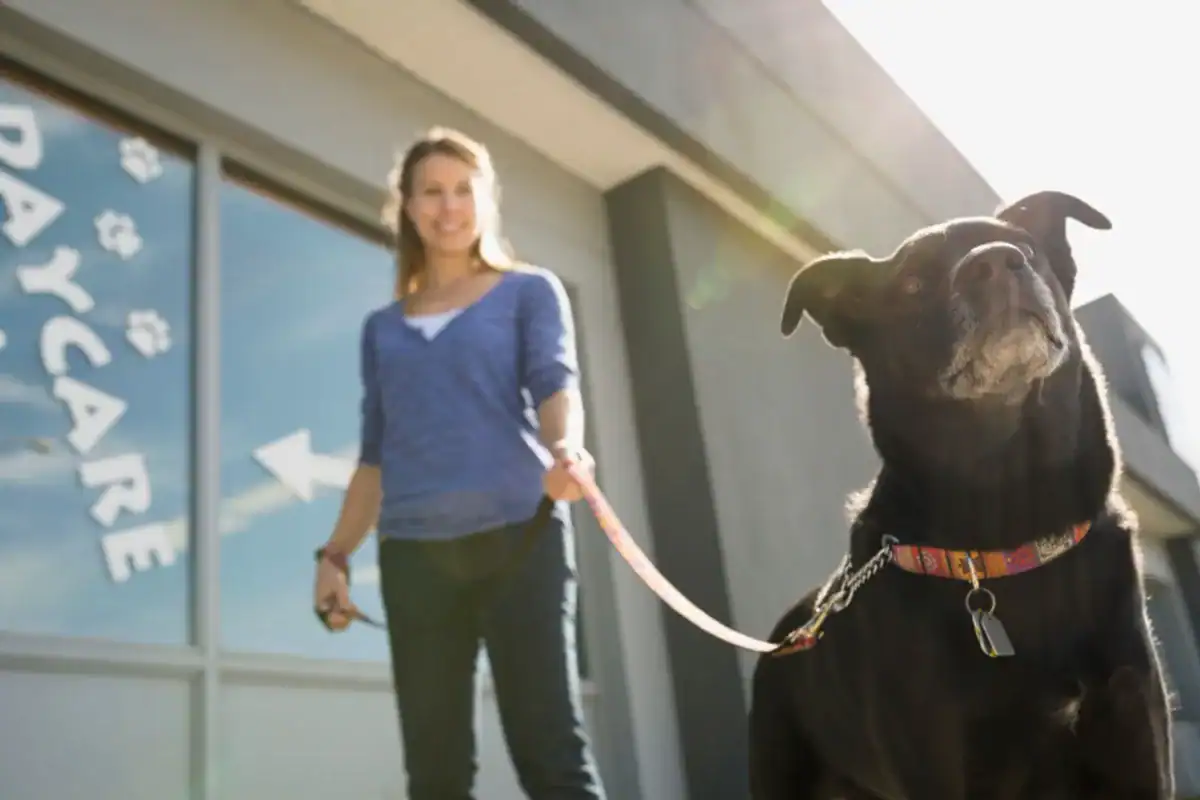
The hardest part of boarding isn’t the days apart, it’s the 60 seconds in the lobby. Long, emotional goodbyes actually make your dog more anxious, while a calm, confident, quick hand-off helps them settle in faster. Here’s the psychology behind it, and exactly how to do it right.
The Goodbye Every Dog Owner Dreads
You know the feeling. You’re standing in the lobby, leash in hand, and suddenly you can’t quite make yourself walk out the door. Your dog is looking up at you, and your chest tightens with something that feels a lot like guilt.
If this sounds familiar, you’re not alone, and you’re not a bad pet parent. It’s the same ache you’d feel dropping a kid off at college: equal parts love, worry, and the nagging sense that you’re leaving them behind when they need you most.
Here’s the good news: this moment is completely fixable. The instincts that feel most loving in the moment, lingering, hugging tight, talking in that soft, worried voice, are often the exact things that make your dog more anxious once you’re gone. Once you understand why, drop-off gets easier for both of you, fast.
The Psychology Behind It: Why Dogs Mirror Your Emotions
Dogs are extraordinarily good at reading humans. Long before they understand our words, they’re reading our tone of voice, our posture, our breathing, and the tension in our hands. Researchers call this emotional contagion, the tendency for one animal’s emotional state to “transfer” to another nearby, especially between dogs and the people they’re bonded to.
When you crouch down, wrap your dog in a tight hug, and murmur “it’s okay, mommy’s going to miss you so much” in a high, worried voice, your dog doesn’t process the words. They process the signal. Your racing heartbeat, your hesitant body language, and your emotional voice all tell your dog: something is wrong here.
A calm handler, on the other hand, sends the opposite signal. Confident energy tells your dog the situation is safe and normal, because to your dog, you are the barometer for how to feel about any new environment. When you act like drop-off is no big deal, your dog is far more likely to believe it.
What Not to Do at Drop-Off (Even Though It Feels Right)
Most of the habits that backfire come from a good place, you love your dog, and you want them to know it. But these common instincts tend to prolong anxiety rather than ease it:
- Lingering goodbyes. Every extra minute you spend hovering in the lobby is another minute your dog’s stress builds, waiting for a cue that never quite resolves.
- The high-pitched, comforting voice. That soothing “who’s-a-good-boy” tone we use when a dog seems nervous can actually confirm to your dog that there’s something to be nervous about.
- Tight, prolonged hugging. Physical affection is wonderful, but a long, clingy hug right before you leave reads as tension, not comfort.
- Repeated reassurance. Saying “it’s okay, mommy loves you, I’ll be back” over and over doesn’t calm your dog down, it rehearses the anxiety, for both of you.
- Sneaking out. It might seem kinder to slip away while your dog is distracted, but this can create confusion and hypervigilance, since your dog never gets a clear, predictable signal that you’re leaving and returning.
None of this means your past goodbyes were wrong, most of us learned these habits because they feel loving. The goal now is simply to swap them for habits that actually help.
What to Do Instead: The Confident Hand-Off
The best boarding goodbyes are almost anticlimactic, and that’s exactly the point. Here’s how to make the final 60 seconds work in your dog’s favor:
- Keep your tone light and normal. Talk to your dog the way you would on any ordinary walk out the door, not flat or cold, just relaxed.
- Make the goodbye short. A quick pat, a cheerful “see you soon,” and a clean exit beats a five-minute farewell every time.
- Let the handoff to staff be positive. Encourage your dog to greet the handler warmly; a happy transition to a new, trusted person tells your dog this is a safe exchange, not a loss.
- Skip the guilt-driven affection spiral. Save the big cuddles for when you’re both relaxed at home, not for the one moment your dog needs you to seem unbothered.
- Build a consistent drop-off routine. Dogs thrive on predictability. The same entrance, the same cheerful tone, the same quick exit each time teaches your dog exactly what to expect.
- Leave before you’re tempted to double back. Once you’ve said goodbye, walk out. Returning “just to check” undoes the calm signal you just sent.
Why the Right Environment Makes All the Difference
Your goodbye sets the emotional tone, but what happens after you leave matters just as much. This is where the right facility makes a real difference in how quickly your dog settles in.
At a facility built around dog daycare and training, dogs aren’t just being watched, they’re being engaged, socialized, and given structure that mirrors what they already know from home. Dogs with obedience in dog daycare experience tend to adapt faster to new environments and new handlers, because commands like “sit,” “stay,” and “come” act as familiar anchors in an unfamiliar place. A dog who already trusts a routine of structured play, rest, and guidance settles into boarding with far less stress than one who’s simply left in a kennel with nothing to do.
That’s the philosophy behind Ruffgers, right here in Naples, FL. Our team is trained to read canine body language, redirect anxious energy into positive activity, and help dogs form quick, trusting bonds with our staff, so the transition from “goodbye” to “comfortable” happens in minutes, not days.
Ready to Make Drop-Off Easier?
You don’t have to dread the lobby goodbye anymore. With the right mindset, and the right team on the other side of that leash, boarding can be something your dog genuinely enjoys, not just tolerates.
Ruffgers’ boarding program is designed around exactly this: calm transitions, structured days, and a team that treats every dog like their own. If you’re ready to see what a stress-free stay looks like, we’d love to show you around.
Frequently Asked Questions
-
Why does my dog cry when I leave them at daycare or boarding?
Crying at drop-off is often a response to your own emotional signals, not the environment itself. Dogs pick up on tension, lingering, and worried tones through emotional contagion, and this can trigger vocal protest even in a safe, comfortable facility.
-
Is it better to say a long goodbye or a quick one?
A quick, calm goodbye is almost always better. Long goodbyes give anxiety more time to build, while a short, confident hand-off signals to your dog that the situation is normal and nothing to worry about.
-
How can I tell if my dog has separation anxiety at boarding?
Mild adjustment stress, a little whining or restlessness for the first hour, is normal and usually fades quickly. True separation anxiety looks like prolonged panic, pacing, loss of appetite, or destructive behavior that doesn't ease as the day goes on; a qualified facility should be able to tell you which one your dog is experiencing.
-
Does daycare or training help dogs adjust to boarding faster?
Yes. Dogs with regular dog daycare and training experience are used to structure, new handlers, and group environments, which makes the transition into a boarding stay feel far more familiar and far less stressful.